
Graham Greene stands as one of the most enduring and enigmatic literary figures of the twentieth century, a writer whose fiction translated to film with remarkable fluidity and depth. Born in 1904, Greene’s prolific career spanned novels, short stories, plays, and screenplays, blending elements of political intrigue, psychological tension, and spiritual crisis into narratives that captivated readers and filmmakers alike. His literary output defied easy categorisation, moving between what he dubbed his “entertainments” and his more overtly literary works, yet both categories shared his signature blend of suspense, moral ambiguity, and richly drawn characters.
Cinema and Greene shared a natural affinity. He was not only a novelist whose work lent itself to adaptation, but also a screenwriter in his own right, deeply involved with the film industry and attuned to its storytelling rhythms. His stories often unfolded like cinematic blueprints, with taut plotting, vivid atmospheres, and dialogue that crackled with subtext. Themes of betrayal, redemption, political instability, and existential doubt resonated powerfully on screen, drawing some of the most celebrated directors and actors of the twentieth century to bring his works to life.
In considering Greene’s place in the intersection of literature and cinema, one finds a rare alchemy. His ability to distill complex human and ethical dilemmas into compelling narratives gave his works a lasting visual and emotional impact. The best film adaptations of his books do more than retell his stories—they amplify and expand them, capturing the unique Greenean worldview where suspense meets spirituality, and where the personal is always entangled with the political.
According to the British Film Institute, there are 82 screen adaptations of Graham Greene’s work, encompassing both film and television. Selecting the ten most significant among them is therefore a challenging endeavor. Nonetheless, the following represents my personal selection of the ten finest adaptations.
10. Doctor Fischer of Geneva (1984)
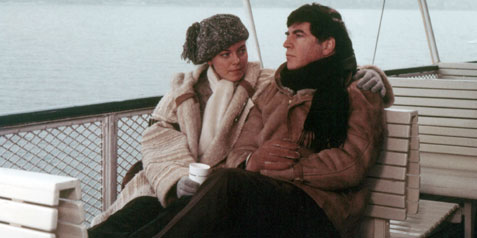
A lesser-known gem among Greene adaptations, Doctor Fischer of Geneva captures the author’s acerbic wit and moral precision in a quietly unsettling way. Adapted from Greene’s 1980 novella and made for television by the BBC, this film stars James Mason in his final role, delivering a chilling performance as the titular Doctor Fischer—a wealthy misanthrope who orchestrates cruel games to test the greed of his so-called friends. Alan Bates plays the disillusioned narrator; a mild-mannered Englishman caught in Fischer’s orbit through his love for the doctor’s estranged daughter.
Though more intimate and restrained than Greene’s more famous thrillers, Doctor Fischer of Geneva pulses with the author’s recurring themes: the corrosive effects of wealth, the allure of corruption, and the futility of rebellion in a morally bankrupt world. Its sparse, almost stage-like structure allows Greene’s dialogue and philosophical undertones to take centre stage. The result is a slow burn of quiet menace and tragic irony—a cold satire wrapped in the elegance of Swiss civility. As Greene himself noted, “the world is not black and white but grey,” and this adaptation lingers precisely in those ambiguous shades.
9. Ministry of Fear (1943)

Directed by Fritz Lang and adapted from Greene’s 1943 novel, Ministry of Fear is a moody, noir-tinged thriller that marries Greene’s paranoia with Lang’s expressionist flair. Released during the height of World War II, the film follows Stephen Neale (played by Ray Milland), a recently released psychiatric patient who stumbles into a surreal and sinister conspiracy after innocently winning a cake at a charity fête. What follows is a hall-of-mirrors descent into espionage, deception, and psychological unease.
Although Greene was famously dissatisfied with the adaptation—calling it “bad, not because it was badly done, but because it was made by people who did not understand the story”—there’s still much to admire. Lang amplifies the novel’s dreamlike tension and air of dislocation, casting shadows both literal and moral across every frame. The film deviates from the book’s deeper moral complexity, opting instead for a streamlined narrative, but retains Greene’s hallmark motifs: fractured identity, moral ambiguity, and the lurking dread beneath polite society.
Ministry of Fear may not be the most faithful Greene adaptation, but it is undeniably atmospheric, capturing a world where innocence is suspect and trust is a luxury no one can afford. It’s a curio of wartime cinema and a fascinating intersection between two masters of paranoia—Greene and Lang—each speaking their own cinematic language.
8. Our Man in Havana (1959)
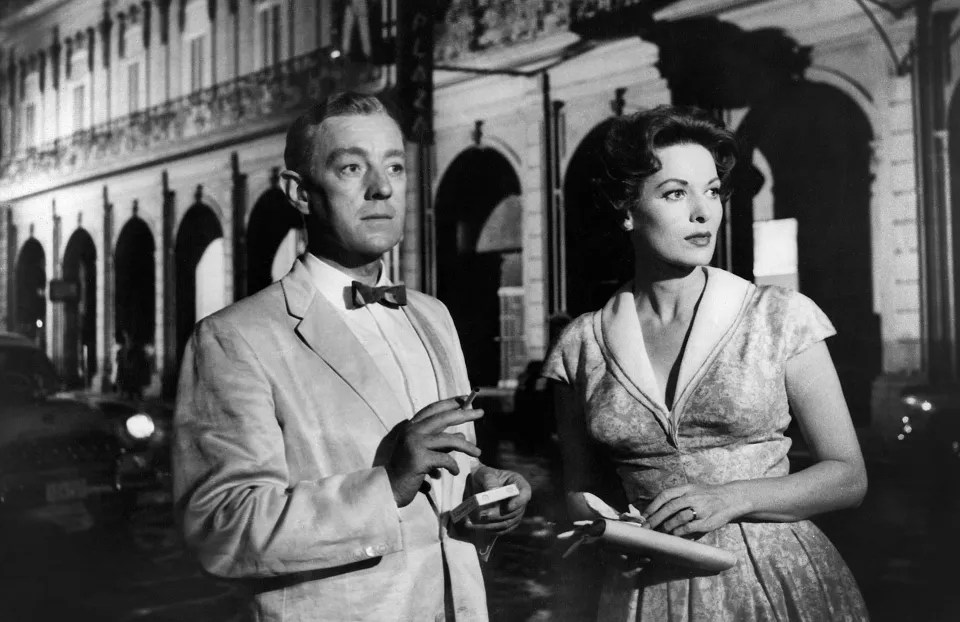
A sly, satirical spy comedy with a dark undercurrent, Our Man in Havana is one of the most faithful adaptations of Greene’s work—thanks in no small part to Greene himself, who wrote the screenplay. Directed by Carol Reed (in their third and final collaboration), the film stars Alec Guinness as James Wormold, a mild-mannered British vacuum cleaner salesman in pre-revolutionary Cuba who is recruited by MI6 to be their “man on the ground.” Lacking any real intelligence to report, Wormold invents a network of fictional agents and bogus enemy plots—all drawn from vacuum cleaner parts—only to find his fabrications dangerously coming to life.
Shot on location in Havana just months before Castro’s revolution, the film captures a moment of looming political upheaval, making it feel more eerily prescient than farcical in retrospect. Greene called the novel “an entertainment,” but, as always, his entertainments are laced with moral unease. Beneath the comedic surface lies a serious critique of the absurdities of Cold War espionage and the consequences of institutional delusion.
Guinness brings a perfect blend of charm and melancholy to Wormold, while supporting turns from Noël Coward, Maureen O’Hara, and Ralph Richardson elevate the film’s wry, cynical tone. Our Man in Havana is both breezy and biting—a comedy of errors that slowly curdles into tragedy. In Greene’s world, even laughter carries the taste of betrayal.
7. Across the Bridge (1957)

Loosely based on a short story by Greene, Across the Bridge transforms a tight moral parable into a tense and compelling character study. Directed by Ken Annakin and anchored by a towering performance from Rod Steiger, the film expands Greene’s brief tale into a gripping noir-inflected drama about identity, guilt, and the shifting nature of justice.
Steiger plays Carl Schaffner, a corrupt British businessman on the run, who attempts to escape to Mexico while impersonating another man. But as his deception deepens, so does his entanglement with a stray dog—the seemingly minor detail from Greene’s original story that becomes a key emotional and symbolic thread in the film. The plot turns on the classic Greene pivot: a man trying to flee his past is forced to confront it in ways he never expected.
While Greene was initially skeptical of the adaptation, many critics consider Across the Bridge one of the most effective cinematic interpretations of his sensibility. The film captures the moral disorientation at the heart of Greene’s fiction—where borders are both geographical and existential, and where redemption arrives, if at all, at great personal cost. As with so many Greene narratives, the story asks: What makes a man who he is? And what is he willing to lose to preserve that illusion?
Dark, lean, and quietly devastating, Across the Bridge is a hidden treasure among Greene adaptations—less famous, perhaps, but every bit as rich in moral ambiguity and narrative force.
6. Went the Day Well? (1942)
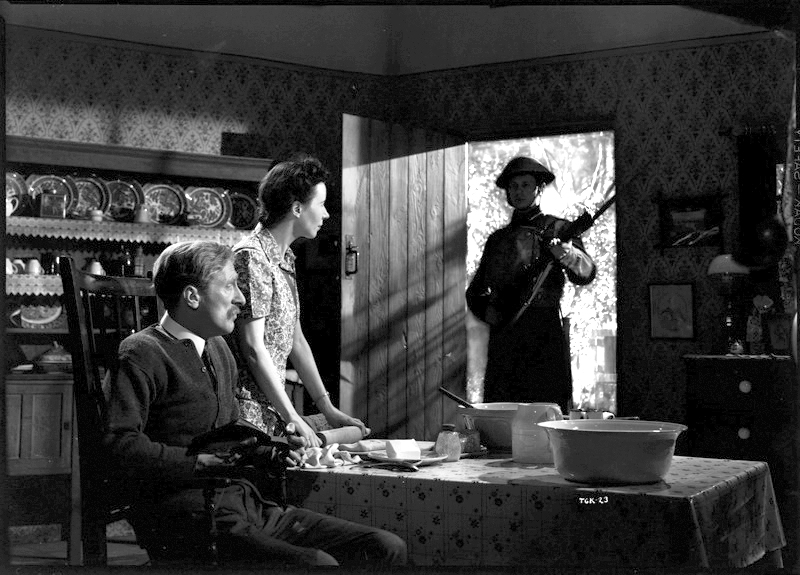
A rare example of a wartime propaganda film that doubles as a masterful piece of cinema, Went the Day Well? is based on a short story by Graham Greene and directed with chilling efficiency by Alberto Cavalcanti. Set in a quiet English village infiltrated by German paratroopers disguised as British soldiers, the film begins with the genteel charm of an Ealing comedy before descending into a grim, suspenseful tale of resistance, sacrifice, and the brutal realities of war.
Though Greene’s original story was only a springboard, the adaptation remains unmistakably infused with his moral DNA. The central tension—how ordinary people respond when the mask of civility is ripped away—echoes Greene’s enduring preoccupation with the thin line between normality and violence. The villagers, initially naive and unsuspecting, are forced to confront not only their invaders but their own capacity for courage and ruthlessness.
Shot during the war but set in a speculative near future, Went the Day Well? operates as both thrilling fiction and subtle propaganda, warning British audiences of the enemy within while celebrating communal resilience. But it’s far from simplistic jingoism. The film’s unflinching portrayal of violence and its morally ambiguous choices—where women, children, and vicars are not spared—gives it a disturbing edge that lingers long after the final scene.
Today, it stands as one of the most effective Greene-inspired films, a gripping blend of thriller, horror, and social commentary that anticipates the darker tones of postwar British cinema. As with Greene’s best work, it forces us to ask: What would we do in their place?
5. This Gun for Hire (1942)

Loosely adapted from Graham Greene’s 1936 novel A Gun for Sale, This Gun for Hire transforms Greene’s gritty British thriller into a sleek Hollywood noir, setting the template for generations of cinematic hitmen to come. Directed by Frank Tuttle and featuring a breakout performance by Alan Ladd as the cold-eyed assassin Raven, the film turns Greene’s bleak moral vision into a taut, stylish crime drama infused with post-Depression-era angst and wartime paranoia.
The story follows Raven, a contract killer double-crossed by his employer and pursued by both the police and his conscience. While Greene’s novel is politically charged and steeped in European disillusionment, the film softens its ideological edge in favour of a more streamlined good-versus-evil narrative—but retains the haunting emotional core. Raven isn’t just a killer; he’s a product of betrayal, abuse, and societal neglect. As Greene often explored, violence isn’t born in a vacuum—it festers in systems that fail the vulnerable.
Veronica Lake co-stars as a nightclub singer and reluctant government agent, offering a blend of glamour and moral tension, while the chemistry between her and Ladd smoulders beneath the surface. With its shadowy cinematography, clipped dialogue, and brooding tone, This Gun for Hire helped define the emerging noir genre—Greene’s sense of moral ambiguity pairing perfectly with the cinematic language of chiaroscuro and fatalism.
Though the adaptation diverges from Greene’s original in setting and politics, it retains his fascination with damaged souls navigating a treacherous world. It’s pulp elevated to poetry, where even a killer might yearn, in vain, for absolution.
4. The Quiet American (2002)

Phillip Noyce’s 2002 adaptation of The Quiet American is a haunting and richly layered return to the heart of Greene’s most politically charged novel. Set in 1950s Saigon during the waning days of French colonial rule and the ominous rise of American intervention, the film is a precise and morally complex portrait of innocence—real, feigned, and willfully blind. It restores the nuance and power of Greene’s original work, which had been blunted in earlier adaptations, particularly the 1958 version that stripped away the novel’s anti-interventionist message.
Michael Caine delivers one of the finest performances of his career as Thomas Fowler, a weary British journalist who clings to detachment—romantic, political, and moral—as the world around him begins to burn. Opposite him, Brendan Fraser gives a quietly unnerving turn as Alden Pyle, the titular American whose idealism masks a deadly sense of entitlement and geopolitical ambition. Their triangle, completed by the serene yet symbolically loaded presence of Phuong, Fowler’s Vietnamese lover, serves as the personal battleground for the novel’s deeper ideological war.
Greene, who had reported from Indochina himself, called the novel “a warning,” and this adaptation heeds it. Noyce—filming in Vietnam and steeping the production in authenticity—preserves the book’s elegant prose and bitter irony while updating its urgency. In the shadow of post-9/11 foreign policy, The Quiet American felt, and still feels, devastatingly current. “Innocence is a kind of insanity,” Greene wrote, and here that line resonates like a prophecy.
With its lyrical visuals, restrained pacing, and moral clarity sharpened by ambiguity, The Quiet American is a film that doesn’t merely adapt Greene’s vision—it embodies it.
3. The Fallen Idol (1948)
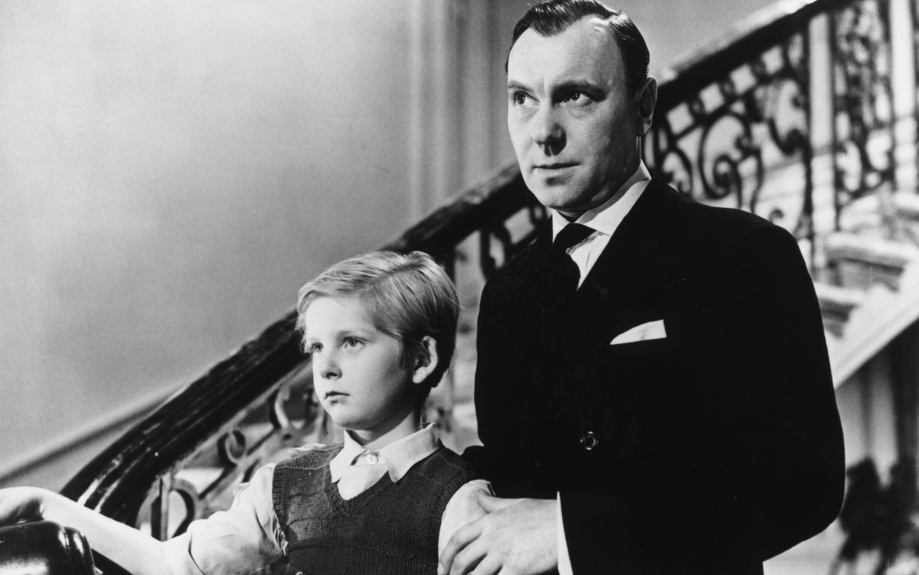
An exquisite study in perspective, perception, and betrayal, The Fallen Idol is one of the most subtly powerful of all Graham Greene adaptations. Directed by Carol Reed and based on Greene’s short story The Basement Room, this 1948 film marked the first of three legendary collaborations between Greene and Reed—and set the stage for what many consider the golden era of British postwar cinema.
Told largely through the eyes of a young boy named Phillipe, the son of a diplomat left in the care of the embassy staff, the film explores how childhood innocence collides with adult complexities. When Phillipe’s idolized but flawed guardian, the butler Baines (played with quiet brilliance by Ralph Richardson), is caught in a web of deceit and marital strife, the boy’s confused efforts to protect him only deepen the crisis. What unfolds is a suspenseful psychological drama that plays like Rear Window through the eyes of a child—full of misheard conversations, misunderstood gestures, and the dangerous consequences of half-truths.
Greene, who also wrote the screenplay, crafts a narrative that turns on silence, implication, and the things left unsaid—a perfect match for Reed’s patient, shadow-rich direction. The result is a film of rare emotional precision, where every glance and gesture holds moral weight, and where the difference between guilt and innocence depends entirely on who’s watching.
The Fallen Idol is not just a masterclass in adaptation; it’s a film that deepens Greene’s story, enriching it with cinematic language while staying true to its themes of disillusionment, moral ambiguity, and the tragic cost of misplaced trust. It’s Greene at his most delicate and devastating—an intimate thriller where the real suspense lies in the heart.
2. Brighton Rock (1948)
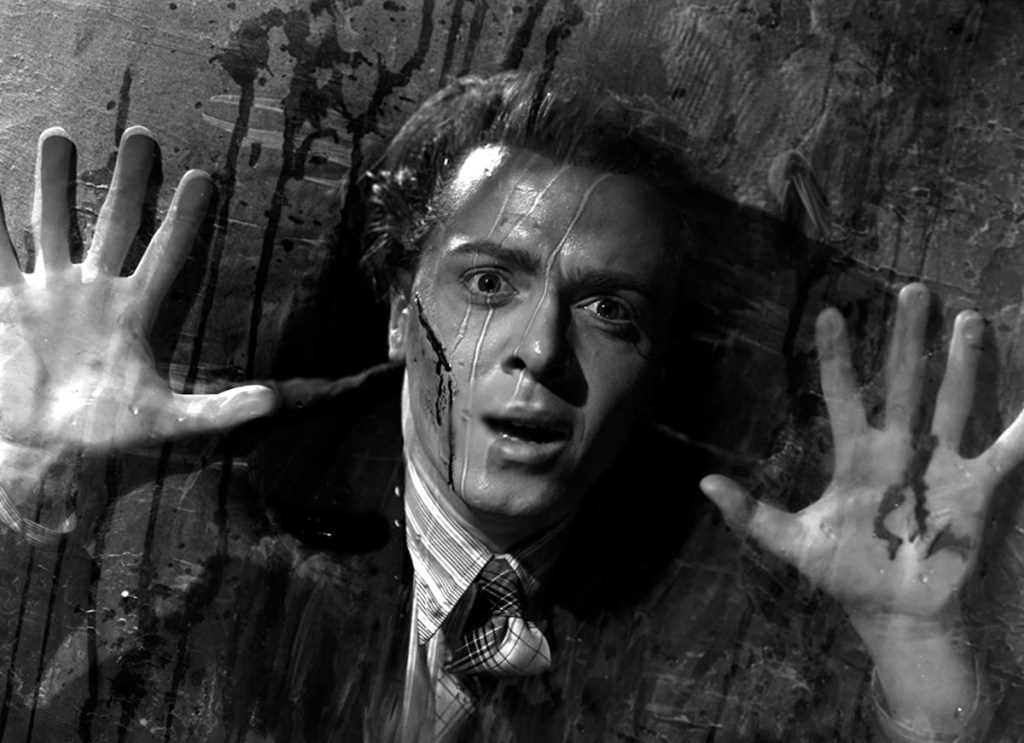
Few adaptations capture the raw, seething undercurrents of Graham Greene’s fiction as powerfully as Brighton Rock. Directed by John Boulting and adapted from Greene’s 1938 novel, this 1948 film plunges into the grimy, violent world of postwar English crime with a ferocity that still feels shocking today. At its centre is Pinkie Brown—a teenage gangster with a razor blade in his pocket and damnation in his eyes—brought to terrifying life by Richard Attenborough in one of the most chilling performances in British film history.
Set against the candyfloss-and-chaos backdrop of Brighton’s seaside amusements, the film juxtaposes the garish surface of British holiday life with the moral rot beneath. Greene’s original novel was a deeply Catholic exploration of good and evil, sin and redemption, and the film—though streamlined for a wider audience—preserves that spiritual intensity. Pinkie is not just a thug; he’s a soul in revolt, a boy who believes he’s beyond salvation but still lashes out in terror at its possibility.
The relationship between Pinkie and Rose—the naive waitress he manipulates into complicity—is at once tragic, tender, and terrifying. Carol Marsh plays Rose with heartbreaking vulnerability, embodying the kind of blind faith that Greene so often wrote about: dangerous, beautiful, and ultimately self-destructive. Meanwhile, Hermione Baddeley’s Ida Arnold provides a brilliant counterweight—a moral force driven not by religion but by human decency, determined to uncover the truth no matter the cost.
With its razor-sharp dialogue, bleak cinematography, and unflinching moral gaze, Brighton Rock was a bold and controversial film for its time. It softens the novel’s ending slightly, but loses none of its power. This is Greene at his grittiest and most theological—a crime story haunted by eternal stakes. “You cannot conceive,” Greene once wrote, “nor can I, of the appalling strangeness of the mercy of God.” In Brighton Rock, that strangeness bleeds into every frame.
1. The Third Man (1949)

At the pinnacle of Graham Greene’s cinematic legacy stands The Third Man—a film that is not merely the finest adaptation of his work, but one of the greatest films ever made. Directed with shadowy brilliance by Carol Reed and written by Greene from an original screenplay (later published as a novella), The Third Man is the perfect confluence of script, direction, performance, and atmosphere. It is Greene’s worldview—moral, cynical, ironic, and strangely romantic—made indelibly cinematic.
Set in the bombed-out ruins of postwar Vienna, the story follows American writer Holly Martins (Joseph Cotten), who arrives in the city to take up a promised job from his old friend Harry Lime—only to find Lime dead, or so it seems. What unfolds is a noir mystery steeped in existential dread, black-market corruption, and personal betrayal. As Martins descends into Vienna’s underworld in search of answers, Greene explores his most enduring themes: loyalty versus conscience, justice versus friendship, and the terrible ambiguity of right and wrong.
And then, of course, there’s Orson Welles as Harry Lime. Appearing only halfway through the film, Welles electrifies the screen with a performance that is both charming and monstrous. His famous “cuckoo clock” speech—largely improvised—is a moment of chilling moral clarity disguised as wit. Lime is one of Greene’s great creations: not a villain in the usual sense, but a seductive embodiment of self-justifying evil, the man who sees human suffering as a detail in the background of history.
From Anton Karas’s unforgettable zither score to Robert Krasker’s expressionist cinematography, every frame of The Third Man pulses with style and tension. Yet beneath the technical brilliance lies Greene’s aching moral vision—of a world where heroism is compromised, truth is elusive, and the people we love most may be the ones who destroy us.
Greene once wrote that The Third Man was meant as “a comic thriller,” but what emerged was something far more enduring: a melancholic masterpiece, and a film that captures the soul of a writer who never stopped probing the shadows for signs of grace.
Beyond the Ten: Other notable cinematic journeys into Greeneland
While the ten films above represent, in my opinion, the richest, most enduring cinematic expressions of Graham Greene’s work, his stories have inspired a wide and fascinating array of other adaptations—some faithful, others controversial, and all revealing the many facets of his literary voice.
Among the most debated is the original 1958 adaptation of The Quiet American, directed by Joseph L. Mankiewicz and starring Audie Murphy as Alden Pyle. Greene was infuriated by the film, which radically altered the novel’s intent—transforming his scathing critique of American interventionism in Vietnam into a Cold War propaganda piece that painted Pyle as a heroic martyr. “If I had known they were going to do that,” Greene later wrote, “I’d never have sold them the rights.” Despite its atmospheric cinematography and strong performances, the film stands as a fascinating case of political revisionism overriding authorial intent—a reminder of how volatile Greene’s work could become in the ideological battleground of cinema.
In contrast, The End of the Affair has been adapted twice with greater fidelity to its tortured spiritual core. The 1955 version, starring Deborah Kerr and Van Johnson, offers a restrained, classic-era take on the doomed love story. But it’s Neil Jordan’s 1999 adaptation that truly captures the novel’s anguish and metaphysical yearning. With Ralph Fiennes and Julianne Moore delivering emotionally raw performances, and Roger Pratt’s rain-soaked cinematography cloaking 1940s London in both romance and dread, this film remains a standout for its willingness to embrace Greene’s theological and emotional extremes.
The Heart of the Matter (1953), based on one of Greene’s most introspective novels, deserves renewed attention. Trevor Howard’s performance as Major Scobie—a colonial officer whose attempts at moral rectitude lead to despair—is quietly devastating. It’s a slow-burning, meditative film that reflects Greene’s own Catholic guilt and obsession with the corrosive effects of conscience.
Greene’s shorter works have also made their way to screen with surprising success. The Tenth Man (1988), a TV movie starring Anthony Hopkins, adapts a postwar novella with an almost Chekhovian delicacy, exploring identity, sacrifice, and redemption in occupied France. Similarly, Loser Takes All (1956), adapted from Greene’s light novella, provides a rare glimpse into his droll, ironic side—though the film leans more heavily on charm than on Greene’s underlying melancholy.
Among the more ambitious adaptations is The Comedians (1967), based on Greene’s own screenplay from his novel set in Duvalier’s Haiti. Starring Richard Burton, Elizabeth Taylor, and Alec Guinness, the film attempts to bring Greene’s scathing political satire and moral outrage to the screen, but struggles under the weight of its star power and an uneven tone. Still, it remains a compelling curiosity—grim, politically charged, and unmistakably Greene.
The Human Factor (1979), directed by Otto Preminger from Greene’s final novel, is a quiet, slow-burning espionage drama with a subdued but powerful performance by Nicol Williamson. Less flamboyant than many spy thrillers of its time, it reflects Greene’s late style: stripped-down, melancholic, and focused more on psychological damage than dramatic spectacle. It may lack the cinematic flair of The Third Man, but it lingers, like many of Greene’s characters, in a kind of unresolved moral exile.
Even lesser-known films like The Honorary Consul (1983)—adapted from one of Greene’s later, more politically complex novels—offer intriguing glimpses into his evolving interests. With Michael Caine as the weary, alcoholic diplomat and Richard Gere as the idealistic young doctor, the film captures the tense political atmosphere of Latin America and the moral ambiguities that so often define Greene’s characters.
These adaptations, while not all flawless, extend the reach of Greene’s influence across decades and continents. From wartime noir to colonial tragedies, from metaphysical romance to caustic satire, filmmakers have long been drawn to the ethical labyrinths Greene built in prose. Even when the adaptations falter, they testify to the durability and danger of his stories.

 Simon Hitchman