The Golfing Cat, The Hunter and the Dog and the Forgotten Experiments of 1917
Introduction
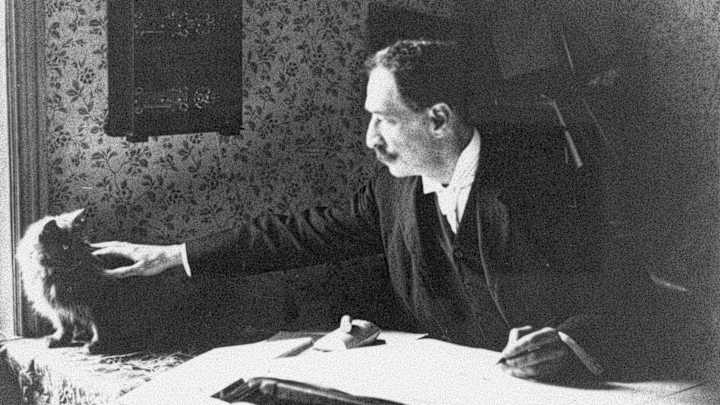
In a previous article I explored the life and career of Louis Wain, tracing his journey from his childhood in Clerkenwell to his rise as one of Britain’s most distinctive illustrators. Yet Wain’s career included several lesser-known episodes that fall outside the familiar story of his famous cats. One of the most intriguing occurred during the First World War, when he briefly entered the new and experimental world of animated film. In 1917 Wain worked with Gaumont-British on a small group of short cartoons. Although the films themselves are now believed to be lost, contemporary references indicate that they were shown in cinemas and may represent one of the earliest attempts to bring an animated cat to the screen.
At nearly sixty years of age, and amid the pressures of wartime Britain, Wain collaborated with producer H.F. Wood and director George Pearson to create animated films including The Golfing Cat and The Hunter and the Dog. Though little material survives, contemporary press reports and Pearson’s later recollections allow us to reconstruct the outlines of the project. If these films were indeed shown in 1917, they would have appeared two years before Felix the Cat first reached cinema audiences in 1919 and several years before Walt Disney began developing his early animated animal characters in the 1920s.
Timeline: Louis Wain and Early Animation
1917 — Wain’s animated films produced
Louis Wain creates animated cartoons for Gaumont-British including The Golfing Cat and The Hunter and the Dog, working with producer H.F. Wood and director George Pearson.
1919 — Felix the Cat appears in cinemas
The famous animated feline becomes one of the first internationally recognised cartoon characters.
Early 1920s — Walt Disney begins producing animated shorts
Disney experiments with animated storytelling before later developing his famous characters.
1921 — Pathé film featuring Louis Wain
A short film shows Wain drawing his cats, providing rare surviving footage of the artist at work.
What the Surviving Evidence Tells Us
Although the films themselves are believed to be lost, several facts about Louis Wain’s animation work can be established from contemporary trade papers and later recollections.
- Wain produced animated cartoons for Gaumont-British in 1917.
- The films were made with producer H.F. Wood and director George Pearson.
- Two titles are known: The Golfing Cat and The Hunter and the Dog.
- Pearson later recalled that “three or four cartoons were completed.”
- The films appear to have been shown theatrically during the war years.
- Wain later appeared in a 1921 Pathé film demonstrating his drawing.
Taken together, these sources show that Wain’s involvement with animation was real and substantial, even though the films themselves have disappeared.
How Louis Wain Entered the Film World
By the 1910s Louis Wain was already a celebrated figure. His humorous drawings of cats behaving like people appeared in newspapers, illustrated books, postcards, and annuals. They were instantly recognisable and enormously popular.
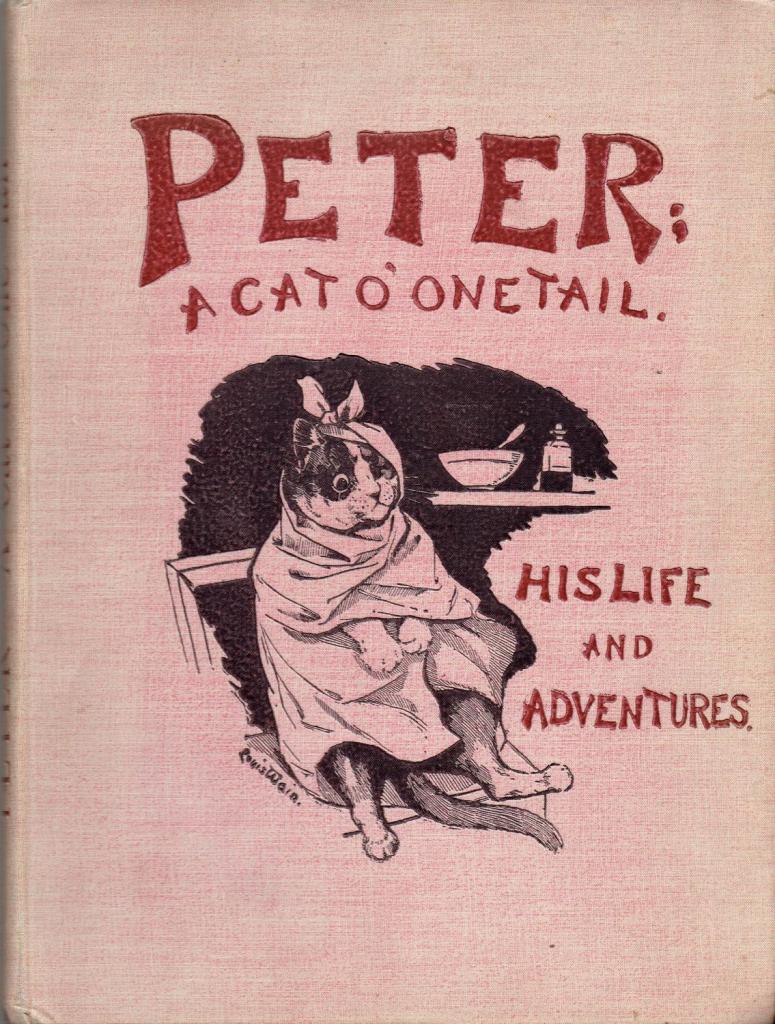
Cinema producers were quick to notice this popularity. Wain had also produced artwork for cinema posters, and his illustrated book Peter, A Cat O’One Tail had attracted attention within the film industry.
It was probably through this connection that producer H.F. Wood approached Wain with the idea of creating animated cartoons. Wood was working with Gaumont-British, one of the most important film companies operating in Britain at the time.
To direct the project Wood turned to George Pearson, a respected filmmaker who would later become one of the pioneers of British cinema. Pearson later described the experience in his autobiography Flashback, recalling how Wain was encouraged to experiment with animation.
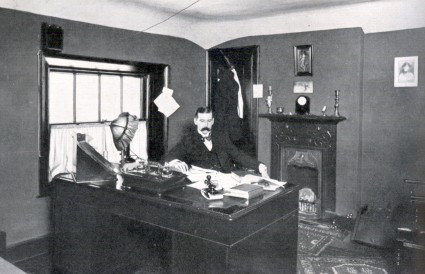
For Wain, the idea must have been intriguing. His cats already behaved like characters in miniature dramas. They played sports, attended social gatherings, argued, celebrated Christmas dinners and went about their daily lives with exaggerated dignity. Animation offered the possibility of allowing these familiar characters to move and act on screen.
Making the Films
The exact production process is not fully documented, but Pearson’s recollections suggest that Wain himself drew much of the animation.
This proved far more demanding than his usual work. Wain was famous for the speed of his illustrations. Editors often remarked that he could produce drawings almost effortlessly. Animation, however, required a very different approach. Each second of film required around sixteen separate drawings. A short film therefore required hundreds or even thousands of individual images.
For an artist used to spontaneous sketching, the discipline of animation must have been exhausting. Nevertheless, the work progressed, and by 1917 at least two films had been completed.
The Golfing Cat
The best documented of Wain’s animated films is The Golfing Cat. Contemporary references suggest that the film was around ten minutes long, a substantial length for an animated cartoon at that time. The main character was reportedly a cat named Pussyfoot.
Although the film itself is lost, descriptions suggest that Pussyfoot was an energetic and mischievous character who behaved very much like the cats in Wain’s illustrations. The choice of golf as a subject also reflects Wain’s typical humour. A dignified cat attempting to play a gentleman’s sport would have provided endless opportunities for visual comedy.
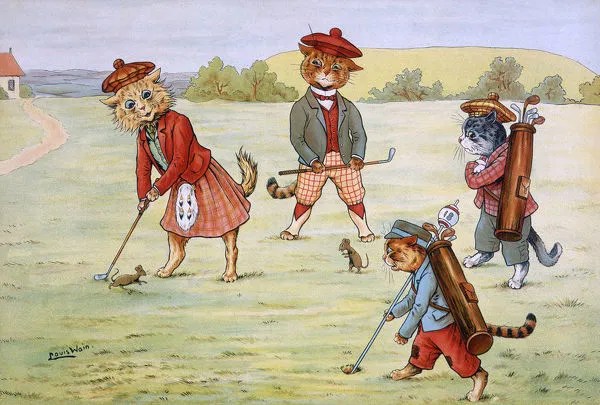
What makes the film particularly interesting today is that Pussyfoot appears to have been an anthropomorphic cartoon cat several years before Felix the Cat became famous.
The Hunter and the Dog
The second known film from the project was The Hunter and the Dog. Less information survives about this cartoon, but the title suggests a humorous narrative involving animals and human behaviour. Wain often enjoyed reversing roles between animals and people, so it is possible that the film played with similar ideas.
George Pearson later suggested that more cartoons were produced than the two usually mentioned. In his autobiography he recalled that “three or four cartoons were completed.” If this recollection is accurate, then at least one additional film may once have existed, though its title and subject remain unknown.
A Persistent Historical Error
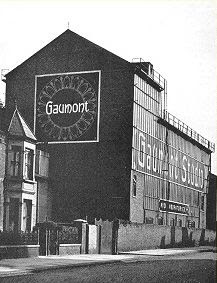
Many modern references claim that Wain’s films were made at Shepperton Studios. This is almost certainly incorrect. Shepperton Studios was not founded until 1931, fourteen years after Wain’s films were made.
The cartoons were therefore almost certainly produced at one of Gaumont’s earlier London facilities or another temporary studio used during the war years. This confusion appears to have arisen from later attempts to connect early British animation with more familiar studio locations.
Reception and Disappearance
Contemporary accounts suggest that the films were moderately well-received, though they did not lead to a long series of animated productions. There were several reasons for this. First, animation was still a difficult and expensive process. British studios during the First World War faced severe financial and technical limitations. Secondly, Wain himself may have found the work too demanding to continue on a regular basis.
Whatever the reason, his experiment with animation appears to have ended after the initial group of films. As with many films of the period, the originals were not carefully preserved. Early film stock was fragile and highly flammable, and thousands of silent films from this era have been lost. Wain’s cartoons appear to have suffered the same fate.
Louis Wain on Film: The Pathé Short of 1921
Although the animated films disappeared, Louis Wain did appear on screen a few years later. In 1921 Pathé produced a short film showing Wain at work in his studio. In this film the artist demonstrates how he draws his famous cats, producing sketches quickly and confidently while explaining his technique.
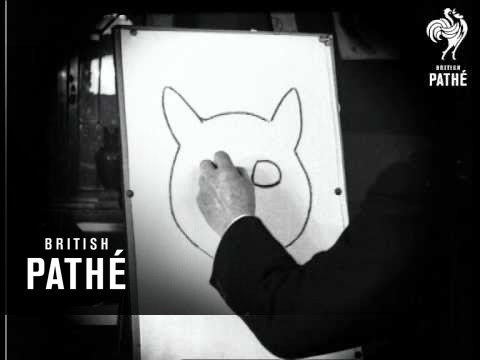
The short film is important because it provides one of the very few surviving moving images of Wain himself. Watching him draw, it is easy to understand why producers once thought his lively cats might succeed as animated characters.
Wain’s Place in Early Animation
Seen today, Wain’s animation work occupies a small but interesting place in film history. His cartoons appear to have been produced before Felix the Cat became popular and before Walt Disney began developing animated animal characters in the early 1920s. This does not mean that Wain directly influenced later animators, but it does show that the idea of humorous animated animals was already being explored in Britain at an early stage. His work therefore forms part of a wider story about how artists experimented with animation during its earliest years.
Further Research
Because the original reels of The Golfing Cat and The Hunter and the Dog have not yet been located, the full extent of Louis Wain’s animation work remains uncertain. Future discoveries may come from several archival sources.
The British Film Institute National Archive holds many surviving silent-era film catalogues and unidentified reels from early British studios.
The archives of Gaumont-British Picture Corporation—now partly preserved in British and French film collections—may also contain production records that have not yet been fully examined.
Surviving trade papers such as The Bioscope and Kinematograph Weekly occasionally listed short films that no longer survive, and further references to Wain’s cartoons may still lie hidden in their pages.
Finally, Pathé catalogues and surviving prints of the 1921 short featuring Wain may offer additional clues about how the artist’s work was presented to cinema audiences. As silent-era film collections continue to be catalogued and digitised, there remains a small but genuine possibility that fragments of Wain’s animated experiments could one day be rediscovered.
References
Pearson, George. Flashback: The Autobiography of a British Filmmaker. London: Collins, 1957.
“The Bioscope.” Trade paper references to Gaumont-British film productions, 1917.
Kinematograph Weekly, 1917.
Pathé Frères. In the Artist’s Studio (1921). British Film Institute National Archive.
Clarke, Jez Stewart. The History of British Animation. London: British Film Institute, 2021.
Low, Rachael. The History of the British Film 1906–1914. London: George Allen & Unwin, 1948.
Bendazzi, Giannalberto. Animation: A World History, Volume I: Foundations – The Golden Age. Routledge, 2015.

 Simon Hitchman